
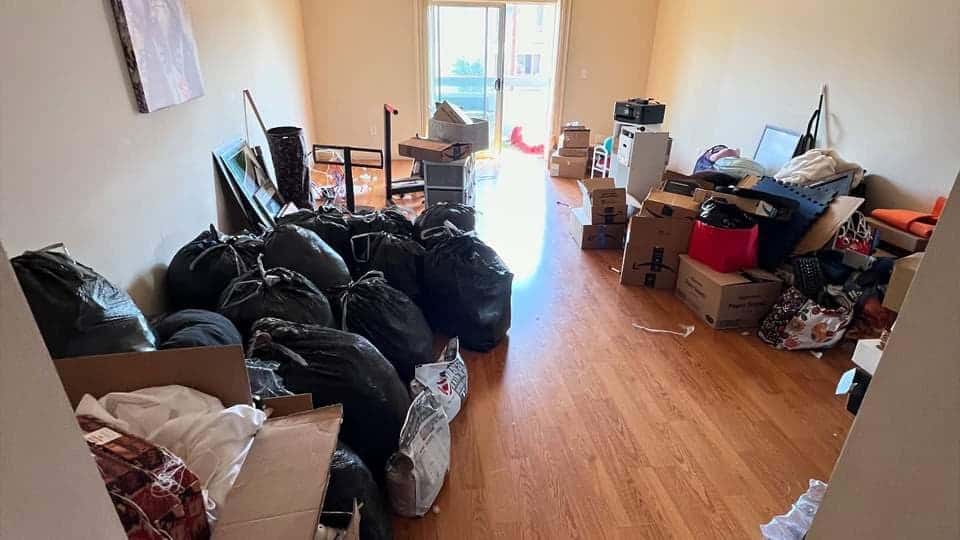
Hoarding cleanouts
North Hollywood and the San Fernando Valley
“They arrived on time and was finished within 2 1/2 hours.”
5.0 on Google from 463 reviews
How does a hoarding cleanout work?
It starts with a conversation, by phone or text, about the home and the person living there. Photos help, but they're not required. We agree on what has to be kept and searched for, set a day, and clear the space room by room without judgment. Price is based on truck space and labor, and we give it before we start.
What we take
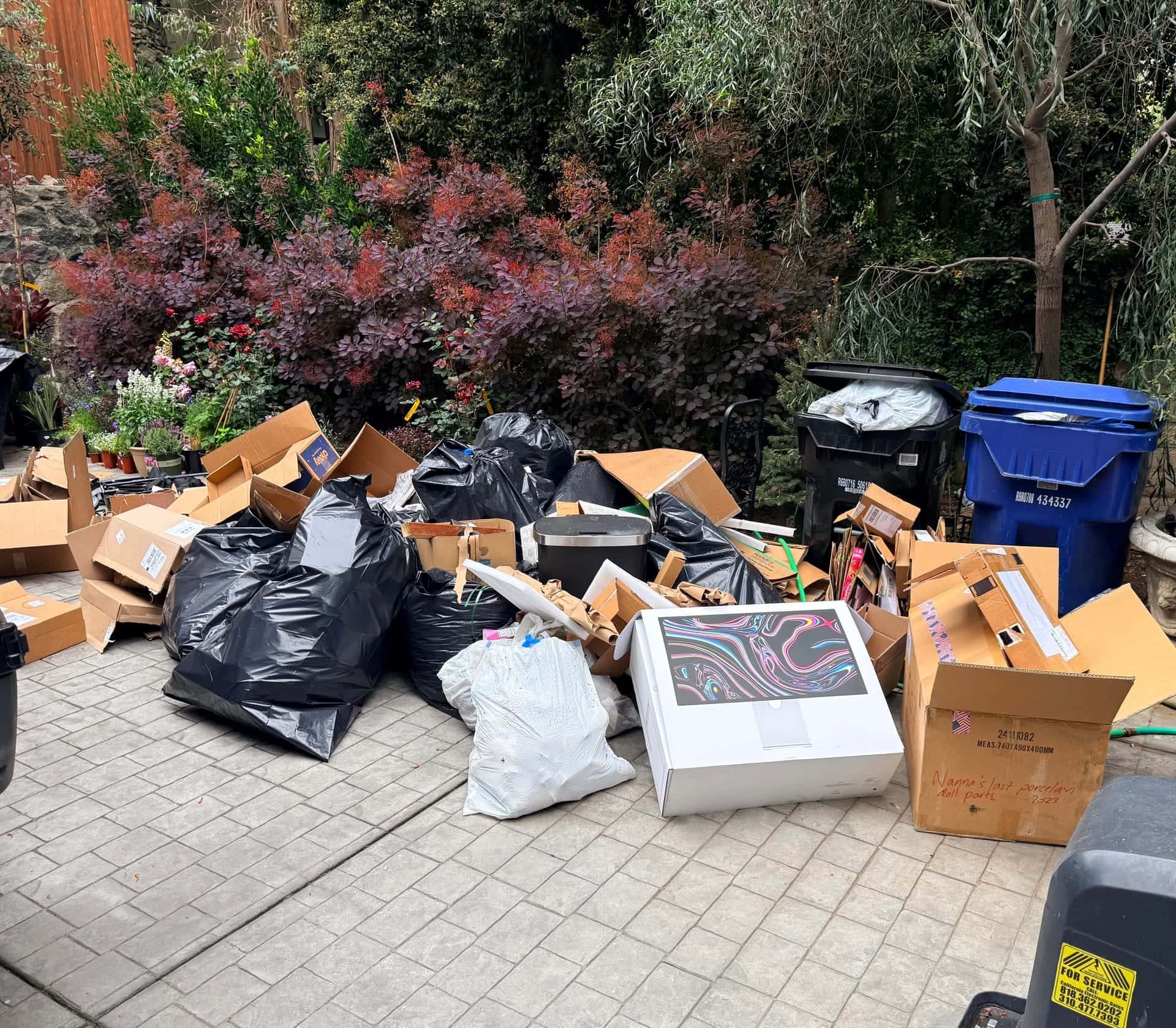
- Accumulated household items, bags and boxes
- Furniture and mattresses
- Clothing and paper
- Kitchen contents and spoiled food
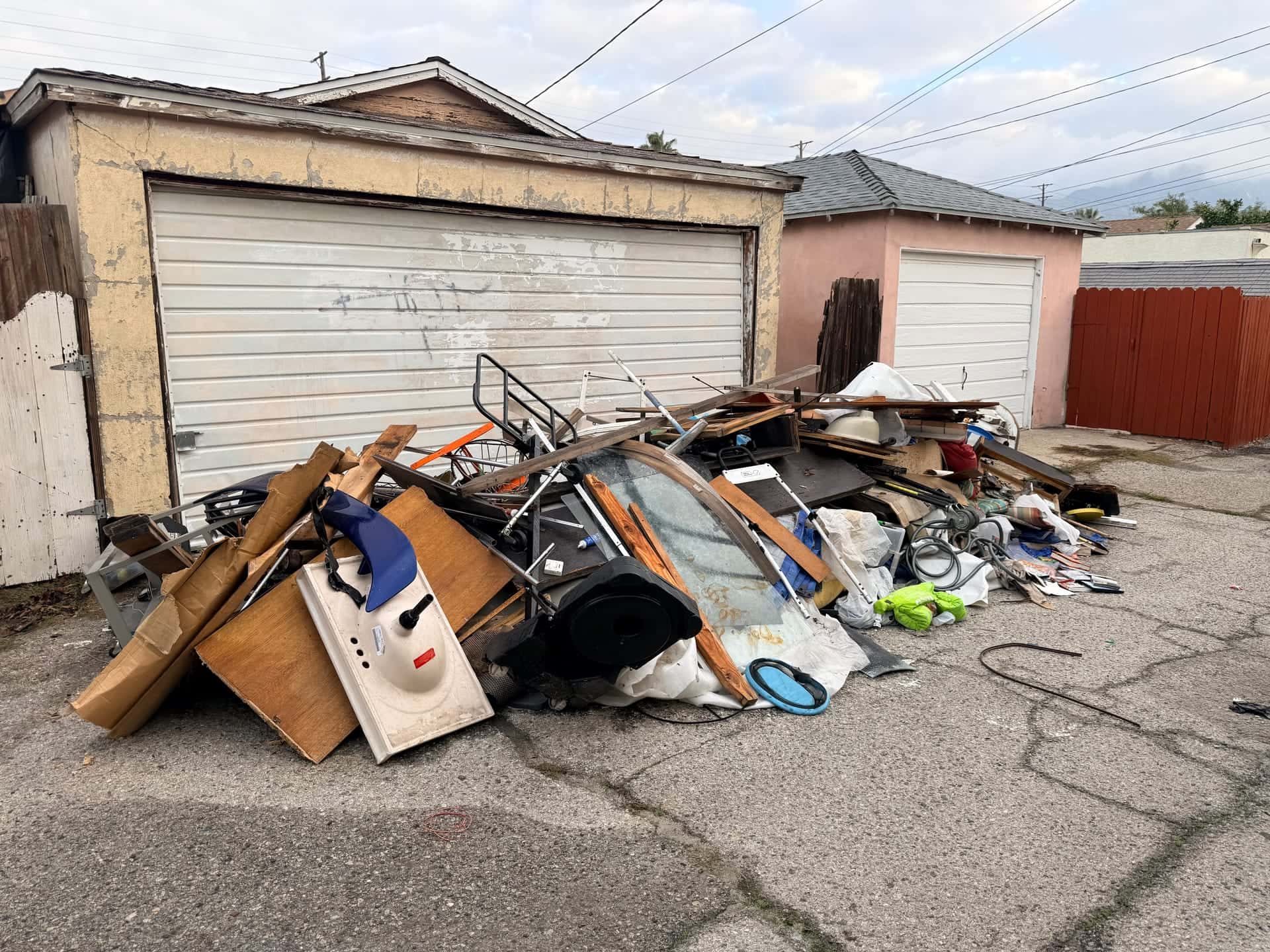
- Yard and garage accumulation
Ask us first
- Homes with biohazards (needles, animal or human waste): tell us first.
- We don't take paint, chemicals (like motor oil and solvents), tires, asbestos, medical waste, ammunition or propane tanks, empty or full. We'll point you to the right drop-off.
How it works
Most jobs go from first text to swept-up driveway the same way.
How much does hoarding cleanout cost?
Hoarding cleanouts are priced by truck space and labor. Because it's hard to see volume in photos, we may ask for a walk-through first so the number doesn't change on the day.
Fastest quote: text photos of your items to (909) 566-3090.
Hoarded homes aren't just big cleanouts. There's a person attached to every room, decisions take longer, and the stuff itself can hide things that need special handling. This section covers how the work is paced, what's likely to turn up and the rules for it, and the honest options for getting the belongings out.
What's included, step by step
- A conversation first. Call or text about the home, the person living there, and what the family hopes happens. There's no need to send photos until you're ready.
- A plan for what gets kept. Make a short list of things to watch for (papers, photos, jewelry, keys, medicines) and who makes the final call on each.
- Walk-through or photos, then a price. Packed rooms are hard to size from a picture, so a visit is often more accurate.
- Clearing room by room. Each room gets finished before the next is started, so there's always one cleared space to breathe in. Anything that looks important is set aside.
- Pathways and exits. In a home that's hard to move through, the crew starts at the door and works inward.
- Sweep-up as each room empties.
Before the first day
- Agree as a family on who decides what stays, and tell the person living there what to expect.
- Write down what to search for, down to the specific piece of paper.
- Order a free sharps mail-back container if needles might turn up.
- Tell us about pets, mold, pests, or rooms that haven't been opened in a long time.
- Find out whether the building needs a loading time or elevator booking.
- Plan where the kept items will go: a spare room, a storage unit, a relative's garage.
California and LA rules that apply
Homes that have filled up over many years tend to hold things that California keeps out of the trash, and a hoarding cleanout has to sort them out as the rooms are cleared:
- Needles and lancets. No sharps in any trash, recycling, green or roll-off container,[1] and they can only travel in a sharps container to an approved drop-off.[1] Free mail-back containers are available through the state's industry-run program.[2]
- Batteries, including lithium-ion and e-bike packs. These can't go in any household bin; LASAN asks that they go to a S.A.F.E. Center with the terminals taped if possible.[3] Loose, damaged batteries buried under paper are worth finding before anything is compacted.
- Old cleaners, pesticides and pool chemicals. Those belong at a household hazardous waste facility.[4]
- Aerosol cans that still have product in them.[4]
- Propane cylinders from camping stoves and heaters.[4]
- Electronics like old TVs, laptops and phones.[4]
S.A.F.E. Centers take these free from any LA County resident,[5] but they don't take medical waste,[3] so plan medicines and sharps separately.
If a room has animal waste, mold, or signs of a death, a biohazard cleaning company should handle that part. Tell us, and we'll talk through whether they come before or after the belongings are cleared.
What affects the price
- Volume and depth. A room packed to waist height holds far more than it looks like from the doorway.
- Searching. Going through paper and boxes item by item takes more time than loading, and it's often the most important part.
- Pace. Working in shorter sessions, or stopping for decisions, adds labor across more days.
- Access. Blocked hallways, stairs, and apartment buildings with elevator limits all slow the carry.
- Special items such as appliances with refrigerant, mattresses and electronics.
We give a price after photos or a walk-through, before work begins, so it doesn't shift on the day.
Free city options vs. paying a hauler
The City of LA's bulky pickup is free and has no limit for homes LASAN serves,[6] which means a family with time could clear a home in stages, week by week. Each pickup needs at least a business day's notice and an itemized list.[6] That slower rhythm can even suit someone who needs time with each decision. The limits are practical: everything has to be carried to the curb, bags of paper and clothes aren't bulky items, since LASAN counts only things too big for the black bin,[6] and the city won't take chemicals or needles.[6]
Apartment buildings work differently. In Glendale, buildings with five or more units get up to four free bulky appointments a year through their private hauler, four items each.[7] In Pasadena, residents of privately served buildings ask their building's hauler.[8] Glendale warns that items left out without arranged pickup count as illegal dumping,[9] so don't stage piles on the street between pickups. Each city's rules are in its guide: Los Angeles, Glendale, Burbank, Pasadena.
When a landlord, a health concern or a family deadline means the home needs to be cleared now, a crew that can carry and search at the same time is usually the better fit. Call if you'd rather talk before sending anything.
Text photos for a priceor call (909) 566-3090
Where it goes afterward
Most of what leaves a hoarded home is regular waste, and families should expect that. Donation centers take only what's clean and resalable, and Goodwill Southern California won't repair or refinish donations.[10] Towels and blankets in good shape are an exception worth knowing: LA Animal Services lists linens among the items it always needs,[11] and Burbank notes that shelters often take bedding secondhand stores don't.[12] Paper, cardboard and clean containers can be recycled,[13] and electronics and batteries go to e-waste and hazardous waste drop-offs.
Related guides and areas
- For families: how to help with hoarding cleanup in Los Angeles
- If the home belonged to someone who has passed: estate cleanout in LA County
- Chemicals and batteries: how to get rid of paint and chemicals
- What charities accept: Valley donation options by area
- Area pages: Glendale, North Hollywood, Van Nuys and Valley Village
- Related services: estate cleanouts and property cleanouts
What customers said about this job
Contacted Legacy Junk Removal to clean out my elderly mother's apartment (hoarder situation) in Glendale, CA. They arrived on time and was finished within 2 1/2 hours. They did an extraordinary and thorough job! Highly recommend!
Legacy Junk Removal did an excellent job clearing out the apartment if a friend who has moved into a nursing home. They worked effectively and efficiently. Costs are very reasonable. I higly recommend this company.
Ricardo and his crew did an outstanding job cleaning out a family member's home yesterday. They were fast, efficient and respectful. Ricardo and crew were very professional and great to work with. I would absolutely recommend Legacy Junk
Where we do this
Based in North Hollywood, working mostly within 10 miles: the east and central San Fernando Valley and the neighborhoods just over the hill.
Hoarding cleanout: questions
How does a hoarding cleanout start?
With a phone call or a few texts about the home and the person who lives there. Photos help but aren't required, and many families aren't ready to send them. We talk through what has to be found and kept, who will be there, and how fast the person is comfortable going. The price comes after a walk-through or photos, before any work starts.
Will you look for specific things while you clear?
Yes. Tell us what matters most: documents, photographs, jewelry, cash, keys, medications, a particular letter or toy. The crew sets aside anything that looks like it might be important, and you decide what happens to it. Paper-heavy homes take longer for exactly this reason, and it's worth the time.
Is it discreet?
Every home is treated with respect, and the crew keeps the work low-key. If you'd like the truck parked a certain way, loading done from a back gate, or the work kept to certain hours, say so when you book and we'll plan around it.
Can the person who lives there be present?
Yes. Some people want to be there and make each decision; others find it easier to be away while family handles it. Both work. If they're present, the pace slows to match theirs, breaks happen when they need them, and nothing they've asked to keep goes on the truck.
How long does it take?
It varies more than any other kind of cleanout. One customer's elderly mother's apartment in Glendale was done in two and a half hours. A full house with packed rooms, garage and yard can take several days, sometimes spread out on purpose so the person living there isn't overwhelmed.
How much does a hoarding cleanup cost?
It's priced like other cleanouts: by the truck space the load takes and the labor to carry it out. Volume is hard to judge from photos in a packed home, so a walk-through is often the most accurate way to get a firm number. Searching for items and working at a slower pace add labor, and the price reflects that.
Do you handle biohazard cleaning?
No. The crew clears and hauls belongings. If there's animal or human waste, mold or a death in the home, a specialized cleaning company should handle that part. Tell us what you know, and we'll talk through whether they should come before or after the cleanout.
What happens to needles found in the home?
They have to be handled carefully and can't go in the trash. California law bars home-generated sharps from every trash, recycling, green-waste and roll-off container, and they may only be transported in a sharps container. The state's sharps program will mail a free container on request, which is useful to have on hand before the cleanout.
Is there free or low-cost hoarding help in Los Angeles?
We don't have a verified list of programs, so we won't name one here. A doctor, therapist or social worker the person already trusts is often the best first call for support. For the belongings themselves, the City's free bulky pickup takes furniture and mattresses at the curb for homes it serves, if someone can carry things out.
Can anything from the home be donated?
Some things, usually fewer than families hope. Donation centers want items clean and sellable; Goodwill Southern California, for example, doesn't repair or clean donations. Linens that aren't useful to a thrift store can sometimes go to animal shelters, which often list towels and blankets as needs. We donate items that are in fair shape so they get a second life, and recycle what we can. When your items are donated, you'll get a donation receipt from the drop-off location within 14 business days.
Can we just put everything out at the curb?
Not without a booking. Items left on the curb or street without arranged pickup can count as illegal dumping in Glendale and can bring a citation in Pasadena. In the City of LA, schedule bulky pickup first and list every item, since crews take only what's on the order.
What if the person lives in an apartment building?
It depends on who collects the building's trash. In Glendale, buildings of five or more units get up to four free bulky appointments a year through the building's private hauler, each limited to four items. In Pasadena, residents of privately served buildings ask that hauler. The property manager can usually tell you, and can help with elevator or loading-dock timing.
Sources
Last reviewed: September 2026. Rules, fees and hours change; check with the city or program before you go.
- [1]Health and Safety Code §118286 — California Legislative Information (leginfo.legislature.ca.gov)
- [2]Sharps Waste Stewardship — CalRecycle (calrecycle.ca.gov)
- [3]S.A.F.E. Centers (Household Hazardous Waste Disposal), LA Sanitation & Environment (sanitation.lacity.gov)
- [4]Waste Banned from the Trash — CalRecycle (calrecycle.ca.gov)
- [5]East Valley: Randall Street S.A.F.E. Center, LA Sanitation & Environment (sanitation.lacity.gov)
- [6]Schedule a Bulky Item Pickup, LA Sanitation & Environment (sanitation.lacity.gov)
- [7]Haulers (FAQs), Glendale Integrated Waste Management (glendalerecycles.com)
- [8]Residential Refuse Service & Recycling, Department of Public Works (cityofpasadena.net)
- [9]Residential (1-4 Units), Public Works (glendaleca.gov)
- [10]Goodwill Southern California, Donation Guidelines poster (PDF, dated 2-28-19 in filename) (goodwillsocal.org)
- [11]Wishlist, LA Animal Services (laanimalservices.com)
- [12]Bedding, Burbank Recycling Guide (City of Burbank) (cityofburbank.recyclist.co)
- [13]Weekly Curbside Blue Bin Collection (Recycling), LA Sanitation & Environment (sanitation.lacity.gov)
- [14]Call Before You Throw (multifamily/bulky flyer, "Revised July 25") (cityofpasadena.net)
Facilities and organizations mentioned are general local information, not Legacy Junk Removal partners.
Get a quote
Tell us what needs to go and where. We text back a price.
Step 1 of 2
What needs to go?